Posted by Rick Kerbow on | Comments Off on How Tool and Die Making Works
Click to Expand
Precision tools and metal forms — known as dies — are responsible for producing most consumer equipment and products in the market. These gears are used to cut, shape, and mold metal and other materials and are made by tool and die makers.
Often known as machinists, tool and die makers use mechanical and computer-controlled technologies to precisely cut, shape, and finish tools, instruments, and metal components. In addition, they produce gauges, various measuring instruments, and jigs and fixtures, which are used to hold metal while it is being punched, stamped, or drilled.
This article will dive into the die making process and answer the question: what is tool and die work.
What is Tool and Die Making: What’s the Difference?
In the metal stamping process, nearly every mechanical instrument that cuts, forms, supports, or molds metals can be termed a tool. On the other hand, dies are a subset of tools capable of altering metals’ shapes.
So what is a die tool? A die tool is primarily used in tool and die manufacturing to shape or profile materials by cutting or forming them. Like molds, it frequently undergoes customization based on its intended use in production. There is a vast array of die-made products, ranging from simple office essentials like paper clips to more complex aviation components.
In contrast, die and tooling (also known as machine tooling) is the process of acquiring the specialized equipment and parts necessary for the large-scale manufacturing method. Effective tooling ensures the effective performance of manufactured products, prolongs product longevity, and contributes to quality improvement.
Tool and Die Makers: What Do They Do?
Tool and die makers focus on operating machinery to build tools and machine components. These specialists have received substantial training, and they advance in their careers by refining their areas of specialization and acquiring certifications. Tool & Die making is a trade skill. To achieve master toolmaker status, it takes a toolmaker 5-10 years of apprenticeship and years of hands-on experience.
Responsibilities of a Tool and Die Maker
Among their fundamental responsibilities are the following:
Reading and interpreting blueprints, sketches, specifications, or computer-aided design (CAD) or computer-aided manufacturing (CAM) files to create tools and dies
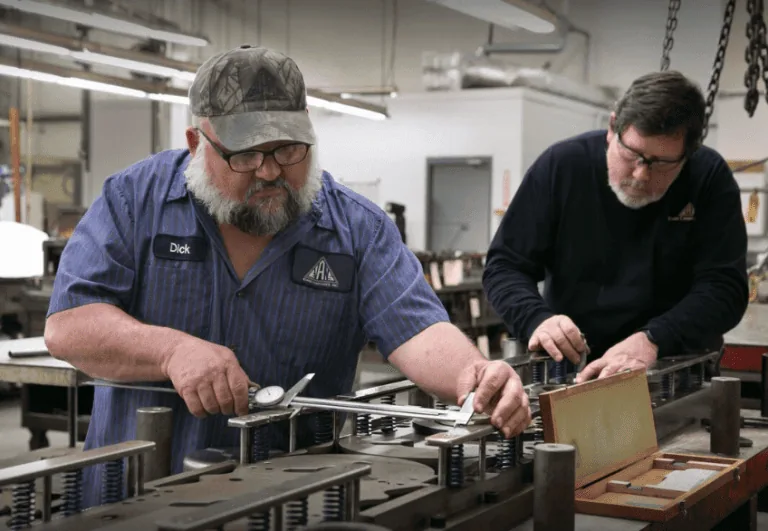
Calculating and confirming the workpieces’ dimensions, sizes, forms, and tolerances
Setting up, using, and disassembling manual, CNC, and conventional machine tools
Filing, grinding, and adjusting parts
Quality checking and testing finished tools and dies if they satisfy specifications
Buffing and polishing tool and die surfaces
Generally, machinists must possess a high school diploma or equivalent certifications. Similarly, tool and die manufacturers may be required to complete additional coursework.
Still, there are a variety of techniques for personnel to become proficient in their positions as machinists, toolmakers, and diemakers. One popular method is via on-the-job training, which usually lasts a year.
Working as a Tool and Die Maker
Most tool and die makers are employed in the manufacturing industry. They do their duties in well-lit and air-conditioned machine shops, tool rooms, and factory floors.
Although the activity is mostly risk-free, using machine tools presents some hazards. Therefore, workers must take safety precautions using protective equipment, such as safety glasses and earplugs.
In addition, tool and die makers and machinists are common in industries, including the following:
Automobile manufacturing
CNC machining
Die making
Maintenance machining
Metal die finishing
Plastic die making
Precision machining
Tool making
Machining Dies
Evans: Your Tool and Die Manufacturing Professionals
Evan Tool & Die offers a variety of solutions, including the manufacture of tools and dies. We handle everything from design and engineering to simulation testing, tool-making, and maintenance.
Posted by Rick Kerbow on | Comments Off on What Is a Tool and Die Maker?
Click to Expand
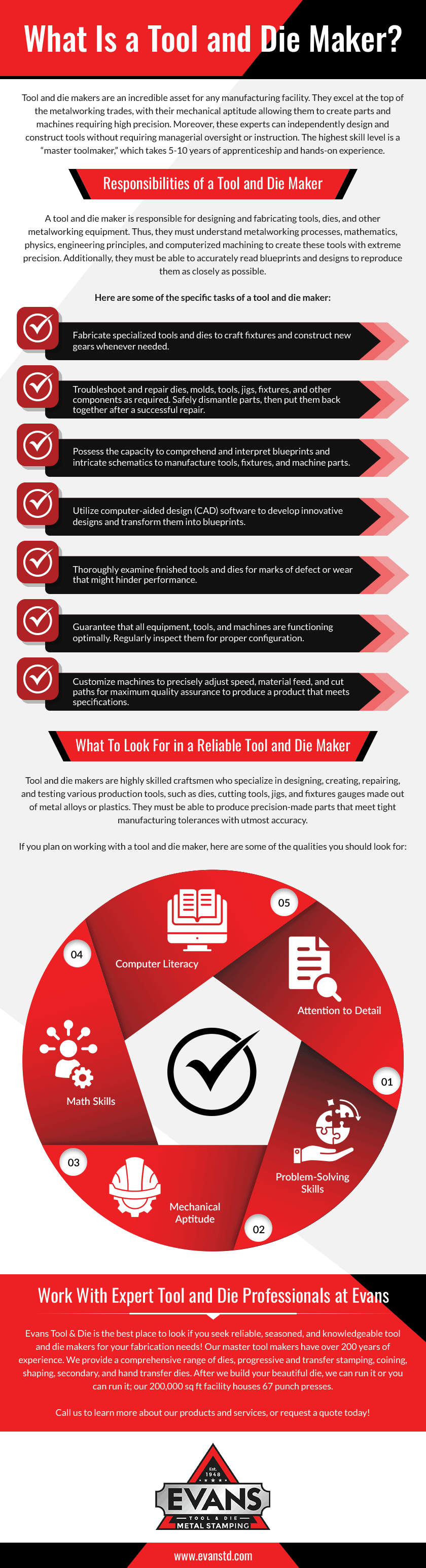
Tool and die makers are an incredible asset for any manufacturing facility. They excel at the top of the metalworking trades, with their mechanical aptitude allowing them to create parts and machines requiring high precision. Moreover, these experts can independently design and construct tools without requiring managerial oversight or instruction. The highest skill level is a “master toolmaker,” which takes 5-10 years of apprenticeship and hands-on experience.
Responsibilities of a Tool and Die Maker
A tool and die maker is responsible for designing and fabricating tools, dies, and other metalworking equipment. Thus, they must understand metalworking processes, mathematics, physics, engineering principles, and computerized machining to create these tools with extreme precision. Additionally, they must be able to accurately read blueprints and designs to reproduce them as closely as possible.
Here are some of the specific tasks of a tool and die maker:
Fabricate specialized tools and dies to craft fixtures and construct new gears whenever needed.
Troubleshoot and repair dies, molds, tools, jigs, fixtures, and other components as required. Safely dismantle parts, then put them back together after a successful repair.
Possess the capacity to comprehend and interpret blueprints and intricate schematics to manufacture tools, fixtures, and machine parts.
Utilize computer-aided design (CAD) software to develop innovative designs and transform them into blueprints.
Thoroughly examine finished tools and dies for marks of defect or wear that might hinder performance.
Guarantee that all equipment, tools, and machines are functioning optimally. Regularly inspect them for proper configuration.
Customize machines to precisely adjust speed, material feed, and cut paths for maximum quality assurance to produce a product that meets specifications.
What To Look For in a Reliable Tool and Die Maker
Tool and die makers are highly skilled craftsmen who specialize in designing, creating, repairing, and testing various production tools, such as dies, cutting tools, jigs, and fixtures gauges made out of metal alloys or plastics. They must be able to produce precision-made parts that meet tight manufacturing tolerances with utmost accuracy.
If you plan on working with a tool and die maker, here are some of the qualities you should look for:
Attention to Detail
Tool and die makers need to pay close attention to detail to ensure accuracy in their work. They must also focus on the task without becoming sidetracked, especially when dealing with complex requirements.
Problem-Solving Skills
Strong problem-solving skills are a must-have for tool and die makers. This will help them determine why a particular machine or tool isn’t functioning correctly.
Mechanical Aptitude
Mechanics are integral when designing, constructing, and repairing tools and dies. Therefore, a solid understanding of this field is essential for success as a tool and die maker.
Math Skills
Tool and die makers must have strong math skills since they often need to convert measurements from one unit of length to another when creating their tools. They also need to be able to read blueprints to ensure that the finished product meets all specified requirements accurately.
Computer Literacy
Being familiar with CAD software is key for tool and die makers since it is increasingly becoming more common in modern factories and manufacturing processes.
Work With Expert Tool and Die Professionals at Evans
Evans Tool & Die is the best place to look if you seek reliable, seasoned, and knowledgeable tool and die makers for your fabrication needs! Our master tool makers have over 200 years of experience. We provide a comprehensive range of dies, progressive and transfer stamping, coining, shaping, secondary, and hand transfer dies. After we build your beautiful die, we can run it or you can run it; our 200,000 sq ft facility houses 67 punch presses.
Posted by Rick Kerbow on | Comments Off on How To Find the Right Tool and Die Maker
Click to Expand
Tool and die makers are some of the most skilled workers in precision manufacturing; they craft tools and metal forms needed for stamping and other forging operations. The work of a tool and die maker entails analyzing design specifications, cutting and shaping metal, assembling parts, and testing completed products for use in manufacturing facilities.
Making a good product starts with having the tools fit for the job. So, to help you acquire the best and most appropriate gear for your needs, this article will help you know what to look for in a tool and die maker.
Also read: how to choose a tool and die shop if you’re comparing vendors, equipment, and capabilities rather than evaluating an individual toolmaker.
What Makes a Good Tool and Die Maker?
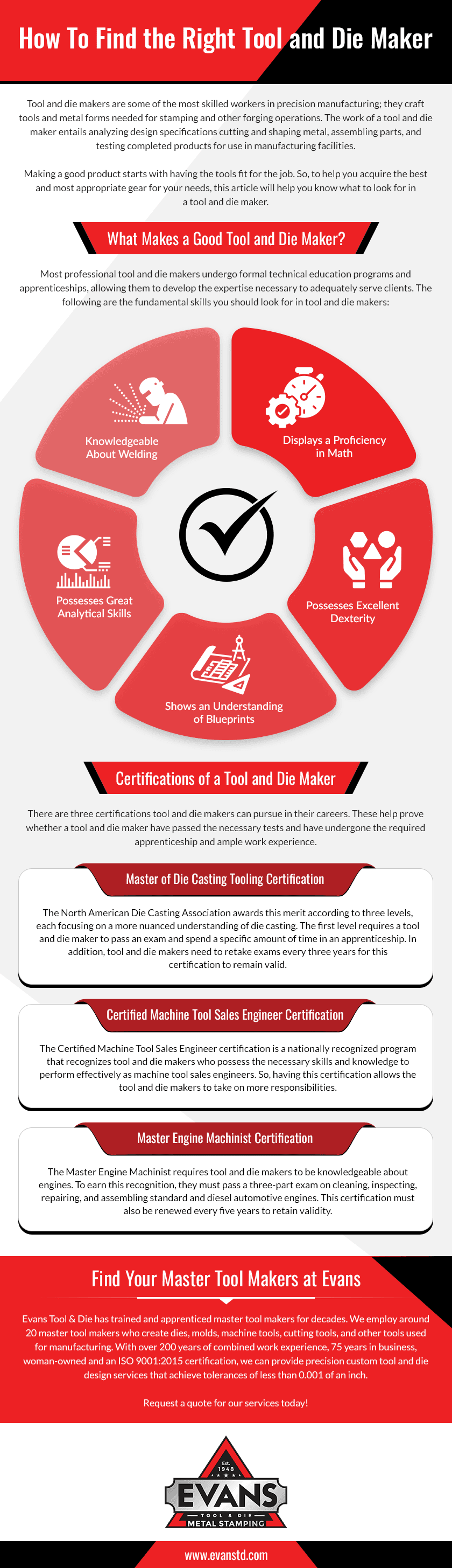
Most professional tool and die makers undergo formal technical education programs and apprenticeships, allowing them to develop the expertise necessary to adequately serve clients. The following are the fundamental skills you should look for in tool and die makers:
Displays a Proficiency in Math
Tool and die makers should be proficient in using and understanding geometry equations and theories to calculate the dimensions of the products and machine parts. They should also have an eye for numerical detail to ensure precision and accuracy in their calculations and work.
Possesses Excellent Dexterity
Because tool and die makers are considered artisans, they should be good at performing tasks using their hands. For example, tool and die makers use dexterity skills to operate machinery by hand or computer.
Shows an Understanding of Blueprints
Tool and die makers are relied on to create new products, which is why they need the necessary skills and knowledge to read and understand a blueprint. In addition, they should be familiar enough with instruction manual jargon and other trade-specific concepts to efficiently operate, maintain, and repair machines and other equipment.
Possesses Great Analytical Skills
Analytical skills are a must for tool and die makers since these will allow them to examine machine parts and tools for quality assurance, make logical decisions on processes, and troubleshoot manufacturing hurdles.
Knowledgeable About Welding
Tool and die makers also need to know about welding. These craftsmen use welding techniques to weld parts together to complete their assembly after creating machine parts and tools. They also utilize welding to correct errors in their designs.
Certifications of a Tool and Die Maker
There are three certifications tool and die makers can pursue in their careers. These help prove whether a tool and die maker have passed the necessary tests and have undergone the required apprenticeship and ample work experience.
Master of Die Casting Tooling Certification
The North American Die Casting Association awards this merit according to three levels, each focusing on a more nuanced understanding of die casting. The first level requires a tool and die maker to pass an exam and spend a specific amount of time in an apprenticeship. In addition, tool and die makers need to retake exams every three years for this certification to remain valid.
The Certified Machine Tool Sales Engineer certification is a nationally recognized program that recognizes tool and die makers who possess the necessary skills and knowledge to perform effectively as machine tool sales engineers. So, having this certification allows the tool and die makers to take on more responsibilities.
Master Engine Machinist Certification
The Master Engine Machinist requires tool and die makers to be knowledgeable about engines. To earn this recognition, they must pass a three-part exam on cleaning, inspecting, repairing, and assembling standard and diesel automotive engines. This certification must also be renewed every five years to retain validity.
Find Your Master Tool Makers at Evans
Evans Tool & Die has trained and apprenticed master tool makers for decades. We employ around 20 master tool makers who create dies, molds, machine tools, cutting tools, and other tools used for manufacturing. With over 200 years of combined work experience, 75 years in business, woman-owned and an ISO 9001:2015 certification, we can provide precision custom tool and die design services that achieve tolerances of less than 0.001 of an inch.
Posted by Rick Kerbow on | Comments Off on Understanding Tool And Die Engineering And Manufacturing
Click to Expand
Tools and dies are essential to the manufacturing industry; without these, cutting, forming, or shaping metals would be unthinkable. A tool-and-die business can help other companies manufacture and innovate products for various industries, from automotive parts, to medical components, to everyday household items. Some machinists and tool and die makers use computer-aided designs to produce parts and products, and they work on many different mechanically controlled and computer-controlled machinery to produce precision tools or components.
What Is A Tool and A Die?
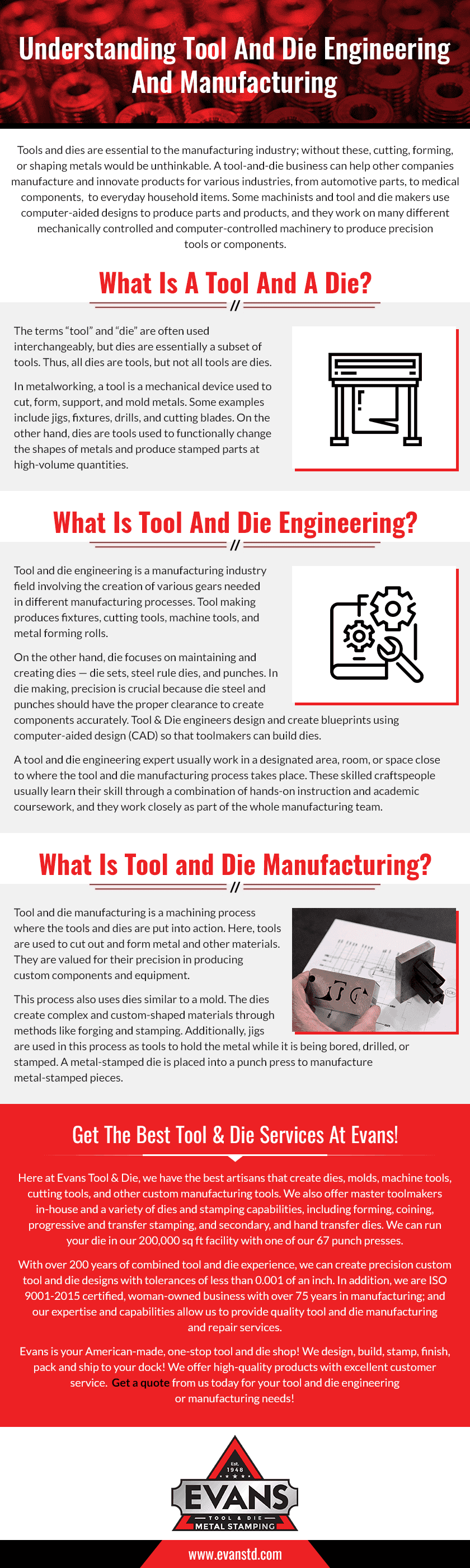
The terms “tool” and “die” are often used interchangeably, but dies are essentially a subset of tools. Thus, all dies are tools, but not all tools are dies.
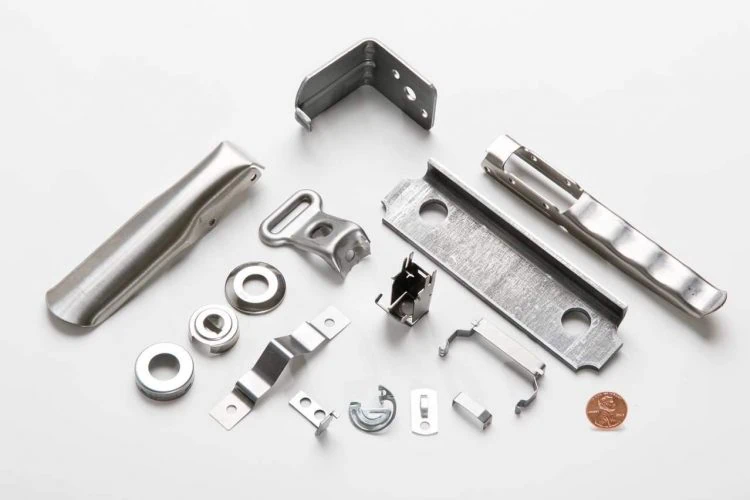
In metalworking, a tool is a mechanical device used to cut, form, support, and mold metals. Some examples include jigs, fixtures, drills, and cutting blades. On the other hand, dies are tools used to functionally change the shapes of metals and produce stamped parts at high-volume quantities.
What Is Tool and Die Engineering?
Tool and die engineering is a manufacturing industry field involving the creation of various gears needed in different manufacturing processes. Tool making produces fixtures, cutting tools, machine tools, and metal forming rolls.
On the other hand, die focuses on maintaining and creating dies — die sets, steel rule dies, and punches. In die making, precision is crucial because die steel and punches should have the proper clearance to create components accurately. Tool & Die engineers design and create blueprints using computer-aided design (CAD) so that toolmakers can build dies.
A tool and die engineering expert usually work in a designated area, room, or space close to where the tool and die manufacturing process takes place. These skilled craftspeople usually learn their skill through a combination of hands-on instruction and academic coursework, and they work closely as part of the whole manufacturing team.
What Is Tool and Die Manufacturing?
Tool and die manufacturing is a machining process where the tools and dies are put into action. Here, tools are used to cut out and form metal and other materials. They are valued for their precision in producing custom components and equipment.
This process also uses dies similar to a mold. The dies create complex and custom-shaped materials through methods like forging and stamping. Additionally, jigs are used in this process as tools to hold the metal while it is being bored, drilled, or stamped. A metal-stamped die is placed into a punch press to manufacture metal-stamped pieces.
Get The Best Tool & Die Services At Evans!
Here at Evans Tool & Die, we have the best artisans that create dies, molds, machine tools, cutting tools, and other custom manufacturing tools. We also offer master toolmakers in-house and a variety of dies and stamping capabilities, including forming, coining, progressive and transfer stamping, and secondary, and hand transfer dies. We can run your die in our 200,000 sq ft facility with one of our 67 punch presses.
With over 200 years of combined tool and die experience, we can create precision custom tool and die designs with tolerances of less than 0.001 of an inch. In addition, we are ISO 9001-2015 certified, woman-owned business with over 75 years in manufacturing; and our expertise and capabilities allow us to provide quality tool and die manufacturing and repair services.
Evans is your American-made, one-stop tool and die shop! We design, build, stamp, finish, pack and ship to your dock! We offer high-quality products with excellent customer service. Have questions about your tool and die project? Contact us to speak with an expert, or request a quote for your tool and die engineering or manufacturing needs.
Posted by Rick Kerbow on | Comments Off on How To Choose a Tool and Die Shop
Click to Expand
The tool and die industry allows people to innovate and make custom parts for the automotive, technology, and aeronautic industries. Tool and die shops are responsible for fabricating dies, molds, and tooling using specialized cutting technology. They help manufacturers and customers create durable and complex machine tools, cementing their spot as key players in the industrial sector.
Picking the right tool and die shop to rely on is crucial. With the high demand for precision, quality, and fast-paced production in most industries, manufacturers cannot risk working with a partner that delivers poor customer service and subpar tools and products.
To help you find a dependable, experienced service provider, consider the following factors when evaluating a tool and die shop. For projects that move from tooling into production, proven custom metal stamping capabilities can be a plus.
Professional Experience
Before picking a tool and die shop, you have to be confident that the shop can meet quality standards. One of the best metrics of reliability is customer satisfaction and professionalism. Thus, it’s essential to do a background check on a prospective provider. Look for client testimonials and accolades from renowned organizations and authorities in the industry.
Quality Equipment and Facilities
A reliable and professional tool and die shop should be able to easily meet tight tolerances and part specifications. Ask about details like the technology used to manufacture designs, the usual turnaround time for custom orders, and the quality of facilities where the products are made. Your chosen tool and die shop should have the proper tools to do the job and not outsource their equipment; doing so takes time and can compromise quality.
The ideal partner should also have air compressors, E.D.M., cutting equipment, measuring gear, proper die handling, milling equipment, drilling, grinding, shaping, welding, and turning equipment. In addition, all the equipment should be specific for the job, with the correct specification and number, to create streamlined components manufacturing.
Prompt Service
Tool and die shops often provide their customers with key components for larger projects by original equipment manufacturers. Hence, orders should be tested and delivered to the client on time. Any delay in service provision can lead to significant production setbacks, costing the customer valuable time and money.
Before full production, the right tool and die shop should have tested the tooling dies. This not only speeds up service but should also save money and valuable time from shipping the tooling die back and forth for modifications.
Comprehensive Service
All-around service is a good bonus for a tool and die shop. Providers catering to a wide array of manufacturing and machining processes allow their clients to streamline their procurement process by sourcing several products and services from a single supplier or partner.
Different tool and die shops offer varying services, depending on their capabilities and facilities. At Evans Tool & Die, we offer the most reliable service for tool and die making, custom metal stamping, design engineering, welding and finishing, and other custom machining services.
Choose Evans As Your Tool And Die Shop Partner!
Evans Tool & Die offers a reduced supply chain risk, efficient and cost-saving solutions, decreased lead times and time to market, excellent products, and a host of services to help you build great things!
Evans builds the highest quality tools available on the market. One stop Shop allows your stamping Die to be run in one of our 67 punch presses. you receive lifetime maintenance service to your tool at no cost as long as Evans runs your die.
At Evans, we have over 200 years of combined tool and die experience to offer excellent service to our clients. We employ master tool makers capable of producing dies, tools, molds, machine tools, cutting tools, and more using our wide variety of equipment.
Posted by Rick Kerbow on | Comments Off on Why The Tool and Die Process Is Important in All Metal Working
Tool and Die is a process of making custom metal parts. It involves using specialized tools and dies to cut and shape the metal into the desired form. Tool and die can be used for a variety of purposes, from creating small parts to fabricating large components.
The process of Tool and Die begins with a design. The design is then transferred to a computer, which will create a simulation of how the part will be machined. This allows for greater accuracy and eliminates the need for trial and error.
Creating Specialized Tooling
The next step is to create the tooling. Tooling is made up of the tools and dies that will be used to cut and shape the metal. The tooling is specifically designed for the part that is being manufactured and must be precise in order to create the desired outcome.
Once the tooling is created, it is used to cut and shape the metal into the desired form. The metal is then sometimes welded and finished as needed.
Design Engineering and Custom Metal Stamping
Design Engineering is the process of designing and creating custom metal parts. Design Engineering is a specialized process that requires a high level of precision and accuracy. When it comes to creating custom metal parts, Design Engineering is the process of choice.
Custom metal stamping , machining, welding and finishing are all part of the Tool and Die process. When it comes to creating custom metal parts, Tool and Die is the process where it all begins.
Metal stamping is the process of using a press to stamp metal into a desired shape. Metal stamping is a common manufacturing process that is used to create a variety of parts. Metal stamping can be used to create parts for a wide range of applications.
Tool makers in the tool and die industry create the dies, molds, machine tools, cutting tools, and other tools used in manufacturing. Tool makers are essential to the manufacturing industry and at Evans our senior tool makers are highly trained and have years of on the job experience.
Welding and Finishing Metal Components and Parts
In Tool and Die, ‘welding’ is the process of joining two pieces of metal together. Welding is a common manufacturing process that is used to create a variety of parts. It is an essential process in the manufacturing industry and provides a high level of precision and accuracy. Welding can be used to create parts for a wide range of applications.
In Tool and Die, ‘finishing’ is the process of polishing or cleaning metal parts. Finishing is a common manufacturing process that is used to put the finishing touches on the manufactured parts. It is an essential process in the manufacturing industry and provides a high level of precision and accuracy. Finishing can be used to create parts for a wide range of applications.
One Stop Tool and Die Shop
At Evans Tool & Die, Inc and Evans Metal Stamping, Inc. we’ve been a one stop shop since 1948. We have the capability to perform all the various services discussed in this article with precision, speed and care. Contact us today to get a free and fast quote to get started with your next tool and die project.
As a certified SBA – Woman Owned Small Business, we keep the entire process in-house. From concept, to design, to creation, packaging and shipping… we remove the need for 3rd party involvement. This ensures your project will be done to the highest quality standards and completed on time and on budget. With Evans, there won’t be any issues with supply chain delays as we handle everything ourselves.
Posted by Rick Kerbow on | Comments Off on The Challenge of Design and Engineering
There is often a disconnect between design and engineering. To illustrate that point, consider an architect who designs amazing buildings that are more beautiful than our wildest dreams! But can those buildings actually be built? The same situation happens all the time in the manufacturing process. That is the challenge of design and engineering. At Evans, we don’t design your parts. We make them, and we help you make your parts better, stronger, and manufacture them more efficiently. Here is a case study of how we did exactly that for Textron Specialized Vehicles, the maker of golf carts and ATVs.
It Can’t Be Made
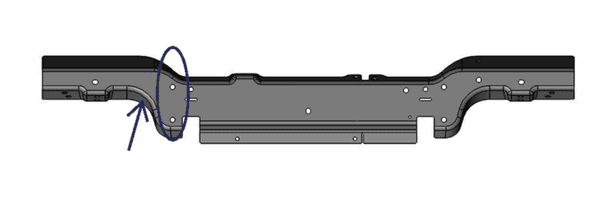
Back in 2015, Evans Design Engineer Randall Stanfield received a request for a quote to produce a specific part. The note that he added to the initial design drawing read, “We cannot make this product as designed.” And that design was version 8 of the design drawing. The part was a grade 50 stamped steel part for an ATV / Golf cart. This model was a brand new product for Textron, and this was their first entry (3 years ago) in the ATV market.
When Evans was invited to bid on several parts, we did not want to make this particular part simply because it could not be built as designed. So, we bid on it, but with a prohibitively high cost so as to make sure that we did not win the bid. Unfortunately, so did everyone else! So, they invited us to consult on the design and engineering of the part. It was during that consultative process that we worked together to figure out the best way to design the part so that it could actually be manufactured.
Design vs. Reality
When designing a part, you need to know whether or not it can actually be made. You can only know that by experience and repetition. Engineering school provides a future engineer a great foundation, but school cannot provide real world experience. Experience brings to life the large delta between design and reality, much like your house in the architect’s drawing: everything is perfectly square and level, but when you put it together, it’s not perfectly square or perfectly level. That’s reality. It is the same with a stamped metal part. So in the end, you may have to “change the print” (the design) to match the part that can actually be manufactured.
“Sometimes, we work with the manufacturer (customer) to modify the design to match the part we create, so the end product can be produced,” said Stanfield. “That’s exactly what we did for Textron.”
Eight Months & 19 Design Revisions
Design revision 8, the first design drawing we received, when tested on LogoPress, got 60% thin-out on the turns and bends in the steel. The steel could only withstand 20% thin-out. We redesigned the part, and got it down to 12% thin-out based on what the metal could do, rather than what the ATV required as designed. Eight months and 19 design and engineering revisions later, we produced version 27 of the design drawing. Evans is still producing that same part today.
Technology Makes Us Faster
Ten years ago, it would have taken us more than 3 years to get to revision 27. Using such advanced testing software shortened that time to just 8 months. The LogoPress software enables us to do detailed design calculations to determine very closely the actual tolerances of the stamped metal part before we actually physically build the part. Before the software, we built the part, then hit it (literally) to see where it would break. This particular part would have required dozens or hundreds of rebuilds.
Update the Product Design
Regardless of how long the process takes, there will always be changes to the design. Therefore, the final design drawings will need to be changed to match the final successful manufactured part. If the customer engineer does not change the final drawing to match the final part specs, in the future, someone’s going to say, “We can’t accept that! It doesn’t match the specification!”
How Can We Go Even Faster?
Design and engineering in manufacturing are, by their very nature, iterative processes. It takes time. Nobody is going to design the perfectly manufactured part in the first revision. How could we shorten the manufacturing design and engineering process? The best method for designing manufactured parts is to get the toolmaker involved early in the process. Let the manufacturing engineers talk to the design engineers. The engineers can discuss actual math, physics, tolerances, and final approval.
Evans Companies, Inc uses cookies to give you a more personalized experience on our website. If you continue to use our services, we assume that you accept such use. Learn more about cookies and how you can refuse them on our Privacy Policy page.