Full Guide to Welding and Finishing: Enhancing Strength, Durability, and Aesthetics for Precision Metal Fabricated Parts

Full Guide to Welding & Finishing

Welding and finishing processes are cornerstone practices in metal fabrication and manufacturing. Welding is the process of using heat and pressure to join metals together. Finishing encompasses an array of treatments and processes used to improve a metal part’s durability, performance, and appearance. The processes work together to form metal products with a strong, reliable bond and durable finishes suited for the intended application. At Evans Tool & Die, our expert metal fabricators offer a range of top-quality welding and finishing services to meet our customers’ requirements.

This guide discusses the different types of welding and finishing processes, and how they’re used together to enhance the strength, durability, and aesthetic appeal of custom metal fabricated parts. We’ll also explore the benefits of professional welding and finishing services and share an overview of the industries served by these processes.
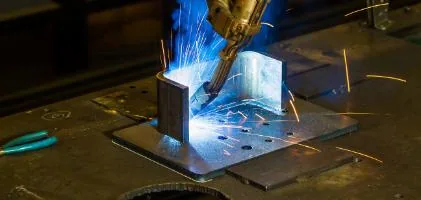
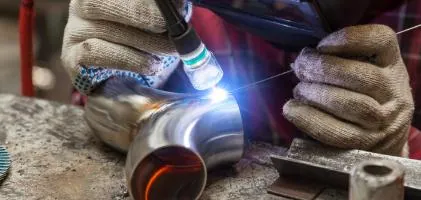
Types of Welding Processes

What Is Welding?

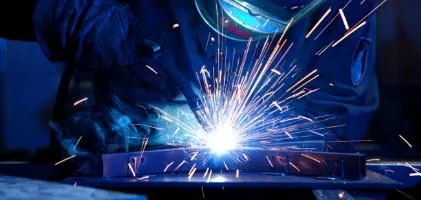
Welding is the process of joining metals together using heat and pressure. Different types of tools and techniques are employed for various metals to achieve the desired results for a specific application. Most welding techniques use a welding arc to heat and bond metals.

The most common welding types include the following:

  • MIG Welding
    MIG Welding

    MIG Welding

    Metal inert gas welding uses a wire electrode fed through a welding gun that acts as a filler to create a bond between two metals. A shielding gas simultaneously travels through the gun to protect the weld area from contamination. MIG welding is known for its versatility, speed, and ability to weld a wide range of metals and thicknesses.

  • TIG Welding
    TIG Welding

    TIG Welding

    Tungsten inert gas welding uses a non-consumable tungsten electrode to melt both metal pieces and a filler metal. A skilled welder must feed the filler metal rod into the joint. TIG welding requires clean welding surfaces and is commonly used for welding thin sections of stainless steel, aluminum, or other non-ferrous metals.

  • Resistance (spot) Welding
    Resistance (Spot) Welding

    Resistance (spot) Welding

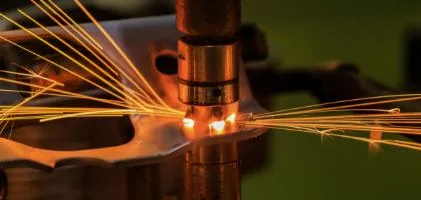
    Resistance welding uses an electric current passed between two electrodes, which clamp the two metal workpieces together. The heat created from the resistance of the metals melts them at the point of contact, forming a bond. Spot welding is preferred for its high efficiency and productivity.

  • Arc (stick) Welding
    Arc (Stick) Welding

    Arc (stick) Welding

    Also known as shielded metal arc welding (SMAW), stick welding is a manual welding process that forms a welding arc between a consumable electrode and base metal. The weld is protected by a flux layer covering the consumable stick electrode, allowing it to be used in various environments without fear of contamination. Stick welding is prized for its simplicity and ability to weld a variety of metals.

  • Flux Welding
    Flux Welding

    Flux Welding

    Flux-cored welding uses a flux-cored wire electrode as a filler that is automatically fed into the joint. The core creates a layer of slag as it melts to protect the weld puddle from contamination, eliminating the need for a gas shield. Flux welding is preferred for its combination of versatility and ease of use, but the weld quality is lower than that of TIG welding.

Types of Metal Finishing Processes

Metal finishing encompasses a wide range of mechanical and chemical processes used to alter the surface of a metal product for desired properties, such as enhanced appearance, increased corrosion resistance, or heightened electrical conductivity. Some of the most common types of metal finishing processes that we provide include:

  • Heat Treating This controlled heating and cooling process changes the structure of metals to enhance hardness, temperature resistance, and/or strength.
  • Black, Yellow, and Clear Chromate Applications A chemical bath reacts with the metal surface to form a protective layer. The colors are a result of the chemicals used.
  • Zinc Plating The application of zinc through an electroplating process increases the component’s resistance to oxidation and corrosion.
  • E-coating Electrophoretic coating uses an electrical current to extract epoxy or paint particles out of a part’s suspension bath and deposit the coating onto the metal surface, enhancing durability and corrosion protection.
  • Powder Coating Powder coating is the electrostatic application of a free-flowing dry powder, which is cured under heat to create a durable finish resistant to corrosion, chipping, fading, and scratching.
  • Anodizing This electrochemical process converts non-ferrous metal surfaces into a durable, corrosion-resistant, anodic oxide finish that resists wear and improves adherence of future coatings.
  • Part Cleaning Chemical-treated water is used in a multi-step process to wash, rinse, and dry parts in a series of machines. Alternatively, a solvent-based cleaning process can clean, rinse, and dry parts in a single machine.
  • Automatic Deburring Deburring is the removal of sharp edges, ridges, and protrusions from metal components.

Benefits of Welding and Finishing

Welding and finishing processes are crucial to metal fabrication, producing strong and durable parts for applications in a range of challenging environments.

The benefits of welding include:

Strength
Strength
Welding melts the metal surfaces being joined and the filler, creating a strong, permanent bond.
Improved Productivity
Minimal preparation and automatic tools increase productivity to complete parts faster.
Enhanced Appearance
Enhanced Appearance
Welds form a smooth surface for a clean appearance.

The benefits of professional finishing services include:

  • Improved appearance by removing imperfections and/or producing an attractive finish
  • Enhanced corrosion resistance
  • Improved electrical conductivity
  • Reduced roughness to improve ease of use and assembly
  • Develops a hard surface that resists damage

Industries Served

Evans Tool & Die is a preferred provider of robotic welding and finishing processes across diverse industries. As a one-stop shop, we provide custom services from design to completion for a broad range of industries, including:

Welding and Finishing Services From Evans Tool & Die

As metal fabrication specialists, the welding and finishing teams at Evans Tool & Die are prepared to take on your toughest jobs and produce results that exceed your expectations. With decades of industry experience and precision equipment maintained on-site at our 200,000-square-foot facility in Conyers, GA, we offer everything your project needs. We’re ISO 9001:2015 certified, ITAR registered, and work with a variety of materials, including but not limited to:

  • Steel
  • Stainless Steel
  • Aluminum
  • Brass
  • Copper
  • Inconel®
  • Titanium
  • Nickel Alloys
  • Tungsten
  • Precious Metals

Contact us today to learn more about our welding and finishing services, or request a quote for your next project.