The metal stamping process produces precise, high-quality metal components. The process can create complex custom metal parts across a broad range of industries, including aerospace, automotive, construction, electronics, and medical devices.
The foundation of this manufacturing process is tool and die design, which directly impacts the long-term accuracy and repeatability of the stamping project. With transfer die stamping, progressive die stamping, and other advanced full-service metal stamping methods, manufacturers can efficiently produce a wide variety of cost-effective custom metal stampings.
Knowing how to utilize metal for metal stamping techniques enables manufacturers to produce custom metal parts that adhere to strict specifications while maintaining cost and production efficiency. Engineers and designers must have a thorough understanding of production methods, material properties, and quality control protocols for the best results.
This comprehensive guide examines the significance of metal stamping in manufacturing processes, highlighting its ability to achieve tight tolerances, rapid production speeds, and consistent part quality while meeting the demands of various industries. It also offers valuable insight into material selection and how it can impact the durability, performance, and manufacturability of a metal part.
What Is Metal Stamping? The Core Process
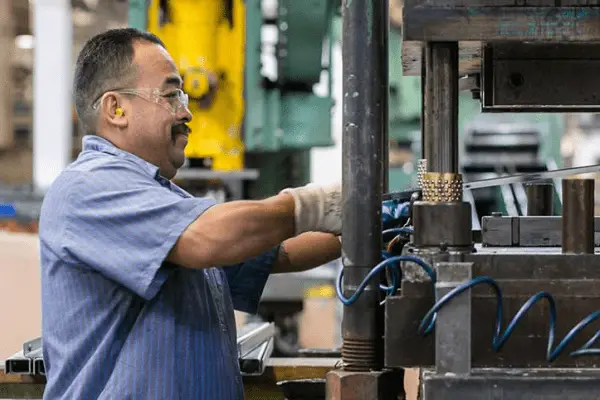
Metal stamping is a versatile fabrication method that utilizes custom dies and stamping presses to transform metal coils or sheets into high-quality components of various shapes and sizes. Specific types of metal stamping techniques include:
- Bending
- Blanking
- Coining
- Cutting
- Embossing
- Flanging
- Piercing
- Punching
- Shearing
- Trimming
These metal stamping processes deliver exceptional results for applications that require strict tolerances and complex geometries, and can be tailored to the specific function and design of the metal part.
Custom metal stampings can accommodate a wide variety of materials and production volumes, ranging in size from micro-miniature parts for electronics to large components for the automotive industry. Unlike off-the-shelf components, custom metal stamping requires specialized dies and tools to ensure the utmost level of accuracy and performance.
Types of Metal Stamping: Choosing the Right Technique
Metal stamping relies on various techniques to produce high-quality, precise finished parts that comply with industry-specific regulatory standards and customer requirements. It is essential to select a cost-effective fabrication method that can meet the unique requirements and production volumes of each project in a time-efficient manner. These are the primary categories of metal stamping that produce custom components.
Single-Hit Stamping
Single-hit dies are relatively simple and inexpensive pieces of equipment, where each stamping station performs a specific stamping operation. An operator loads the metal workpieces and moves them from station to station. This process is ideal for short-run, intricate part production because it is slower than other automated methods but can produce more complex features.
Transfer Stamping
Transfer die stamping uses a single press to operate multiple tools. Each part is removed from its metal strip so it can be rotated and transferred between stations, which shape the part into its desired shape. This technique is often automated to minimize manual intervention and streamline the production process, ideal for high-volume orders.
Progressive Die Stamping
In progressive die stamping, a metal strip advances through a series of stations, performing the following tasks on the same part in the die until the finished component is complete:
- Bending
- Cutting
- Forming
- Punching
Deep Draw Stamping
This metal forming process employs a punch and die to draw a metal blank into a specified shape, using the following techniques to deform the base material and create recessed features:
- Blanking
- Sizing
- Swaging
It is an ideal solution for components in the automotive and aerospace sectors that require recessed cavities, where the depth of the drawn part typically exceeds the diameter. The efficient process requires fewer raw materials than other stamping methods, contributing to its overall cost-effectiveness and sustainability.
Four-Slide Stamping
This metalworking process is best suited for forming complex flat or round parts with multiple twists or bends over 90 degrees, such as:
- Brackets
- Clips
- Flat springs
- Retainers
- Terminals
- Wire forms
Four-slide equipment utilizes four slides or rams to strike the material, effectively streamlining the production of complex parts and offering the flexibility to run smaller quantities to meet specific manufacturing requirements.
Materials for Metal Stamping: Selection and Properties
The success of a precision-stamped metal part depends on selecting the most suitable material for both the stamping process and final application. Material selection influences everything from performance to manufacturability, making it a crucial decision early in the design phase.
OEM engineers can benefit from collaborating with metal stamping specialists during initial development to determine the best type of material for the specific application, ensuring compatibility with the selected stamping techniques.
Key considerations in material selection include evaluating the physical and mechanical properties of the metal, such as:
- Conductivity
- Corrosion Resistance
- Elasticity
- Formability
- Heat Capacity
- Machinability
- Tensile Strength
- Weldability
The thickness, width, cost, and availability of the material, as well as part performance in the application's operating environment, must also be assessed.
Common Metals
Aligning the material characteristics of the following metals with specific manufacturability and performance requirements can ensure reliable, high-quality metal stampings:
Aluminum
Lightweight and corrosion-resistant.
Gold, Silver, and Other Precious Metals
Ideal for high-performance electronics.
Brass and Copper
Good conductivity.
Titanium
Lightweight, strong, and ideal for extreme environments.
Nickel Alloys
Durable and heat-resistant.
Learn More About the Metal Stamping Process from Evans Tool & Die
Since 1948, Evans Tool & Die has delivered high-quality, full-service custom metal stamping and precision tool and die solutions for small prototypes to large-scale production runs. With decades of proven industry experience, our precision metal stamping techniques can accommodate a diverse range of materials and production volumes. We are committed to providing exceptional quality and customer service with every metal stamping project.
Our capabilities include high-speed precision stamping for tight-tolerance, thin-gauge parts and large-component stamping. Skilled operators oversee our progressive die, transfer die, and single-hit stamping equipment, which are rated at 30 to 1,000 tons and reach speeds of up to 12,000 cycles per minute. We can achieve tolerances of plus or minus 0.001 inches or tighter if needed.